Trillet for automotive
Nobody rings a dealership to press buttons
Every caller already knows what they need. The phone tree makes them translate it into a number first — and a good share of them hang up rather than guess. Front Desk just asks.
The handover
What the menu offers. What the caller says instead.
A dealership phone tree assumes the caller already knows which department they need. Real callers describe the problem — and the front desk should meet them there.
The call
Caller stopped on the highway with a blown tyre
What the menu offers
Recorded phone tree
- 1
New and used vehicle sales
- 2
Service bookings and enquiries
- 3
Parts and accessories
- 4
All other enquiries
- 0
To repeat this menu
No option for “I'm stranded.” Caller has to guess.
What the caller says instead
Front Desk · live speech
Caller
I don’t know who I need. I’m stuck on the side of the road — one of my tyres has blown out.
Front Desk
Sorry to hear that. If you’re near traffic, get yourself well clear of the car. I’ll text you the 24-hour roadside number now — and I’ll put you through to Service.
Routed in 9 secondsTransferred to Service · no menu
Where it starts
Replace the tree. Keep the switchboard.
Day one is deliberately modest: answer the phone, work out who the caller needs, put them through. It sits in front of Parts, Sales and Service without changing a single extension behind it.
Nothing behind the switchboard has to move for this to work.
Routing
Intent, not keypresses
Callers describe the problem in their own words. Service, Sales or Parts is worked out on their behalf — no menu, no guessing which extension.
Coverage
Monday morning and Sunday night
The service rush, the lunch gap and after-hours — answered simultaneously, with no queue and no hold music.
Judgement
Safety before departments
A caller who's broken down or stranded isn't asked to choose a department — they're put straight through.
Handover
Messages worth reading
When a department can't pick up, name, number, vehicle and reason are captured, read back, and delivered where your team will actually see them.
Where it goes
Routing is the shallow end
A front desk that only transfers calls is still a receptionist. The same conversation can complete the job — reading from and writing to the systems the dealership already runs.
01
Service booking
Check live workshop capacity, offer real slots, take the booking, and write it into the DMS during the call. Confirmation and reminder sent from your number.
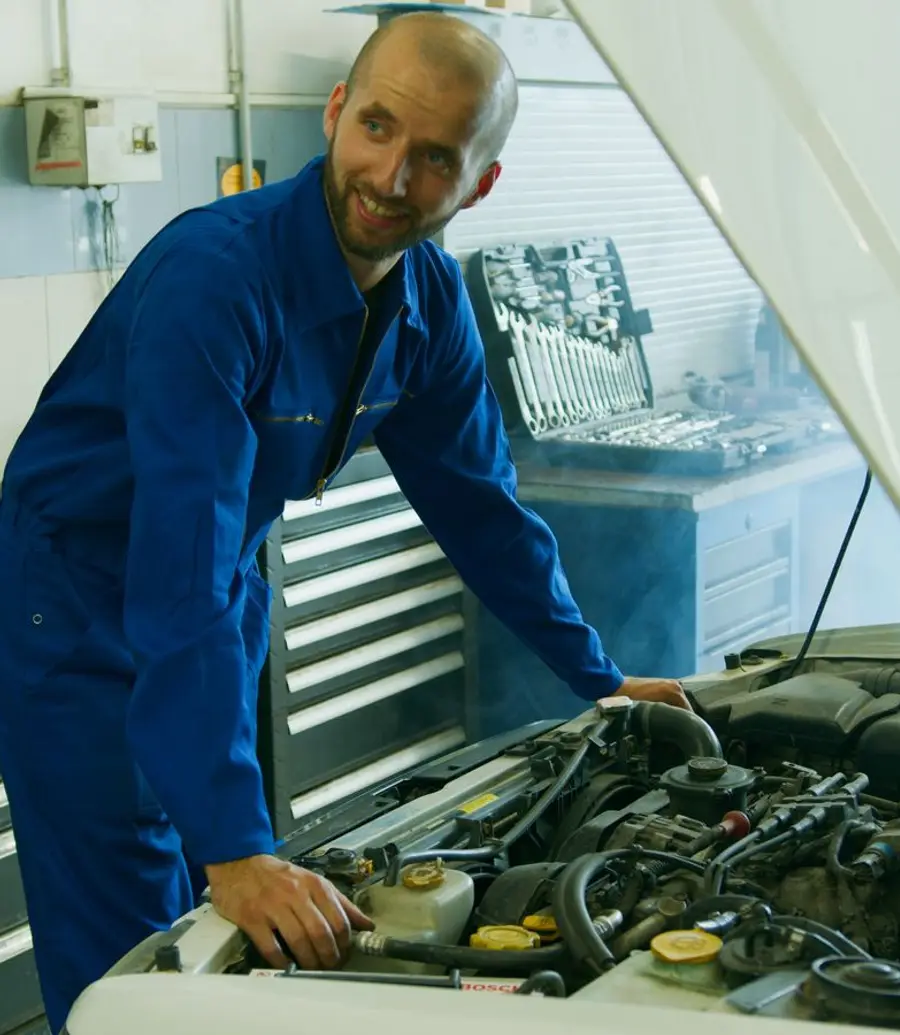
During the conversation
VoiceWorkshop capacity checkedNext slot · Thu 8:15am
Booking written to your DMSService · ref ••4821
Confirmation sent from your numberSMS · reminder scheduled
02
Parts enquiries
Capture the VIN, rego and part described, check availability, and raise the enquiry against the right vehicle instead of leaving a note that says “call back about a filter”.
During the conversation
VoiceVehicle identifiedVIN ••7302 · rego ••4QK
Part matched and availability checkedIn stock at counter
Enquiry raised against the vehicleParts · assigned
03
Sales intake
Qualify the enquiry, book the test drive against a real diary, capture trade-in details and finance interest, and log it in the CRM before the caller hangs up.

During the conversation
VoiceTest drive booked against the diarySat 10:30am
Trade-in and finance interest captured2019 SUV · finance yes
Lead logged in your CRMSales · before hang-up
04
Recalls & warranty
Identify the vehicle, check whether an open recall or warranty claim applies, and route accordingly — rather than sending every caller to the same queue to find out.

During the conversation
VoiceVehicle identifiedRego ••4QK
Open recall check completedOne item applies
Routed to the warranty deskWith full context
05
Outbound service
Scheduled service reminders, overdue logbook follow-ups, and no-show recovery, running on the same records as the inbound calls so context is never lost.
During the conversation
Voice · outboundService due, flagged from your records60,000 km logbook
Reminder call placedOverdue by 6 weeks
Rebooked on the same callTue 8:15am
06
Follow-up in writing
Booking details, quotes and confirmations continue over SMS in the same thread as the call, so the caller has the information without needing a second conversation.
During the conversation
SMSQuote sent in writingSame thread as the call
Booking details confirmedThu 8:15am · Service
No second conversation neededCaller has everything
Why one phone menu fails dealerships
One number. Three departments. Three sets of hours.
Sales, Service and Parts do not open and close together — but they share one phone number. A recorded menu has to pretend they do.
Ring Parts on a Saturday and the menu still offers an empty desk.
| Department | Mon – Fri | Saturday | Sunday |
|---|---|---|---|
| Sales | 8:00am – 5:00pm | 8:00am – 5:00pm | Closed |
| Service | 7:30am – 5:00pm | 8:00am – 12:00pm | Closed |
| Parts | 7:30am – 5:00pm | Closed | Closed |
Sales
- Mon – Fri
- 8:00am – 5:00pm
- Saturday
- 8:00am – 5:00pm
- Sunday
- Closed
Service
- Mon – Fri
- 7:30am – 5:00pm
- Saturday
- 8:00am – 12:00pm
- Sunday
- Closed
Parts
- Mon – Fri
- 7:30am – 5:00pm
- Saturday
- Closed
- Sunday
- Closed
Hours shown are typical for a metro dealership — your rosters may differ. The point is the same: one greeting cannot cover three schedules.
The Front Desk uses each department’s real hours. If someone is on, the call is transferred. If a booking is available, it is taken. If the desk is closed, the caller is told exactly when it opens next — not sent to an empty extension.
Measured in production
What resolution looks like when it isn’t a message
85%
of complex calls resolved end to end
10×
lower call abandonment
80%
reduction in cost to serve
32%
reduction in no-shows
Figures are platform results across live Trillet deployments in healthcare, legal and financial services — the industries where a mishandled call carries the most cost. They are not automotive benchmarks. Dealership figures will be established from your own call data during the first reporting period.

- Error rate
- <1%
- Call escalations reduced to
- <15%
Australian owned, with call recordings, transcripts and backups held in Australia and in-country model hosting available.
Integration happens through your existing systems’ APIs during onboarding — whatever DMS, CRM and telephony the group already runs.
No parallel systems, no number changes.
Full audit trail across every call, transfer and message.
On-premise and private cloud deployment options available.
Frequently asked questions
No. The Front Desk sits in front of Parts, Sales and Service without changing a single extension behind it. No parallel systems, no number changes — it answers your existing switchboard.
Callers describe the problem in their own words and the routing is worked out on their behalf. “There’s a rattle when I brake” goes to Service, a trade-in valuation goes to Sales, and a parts question goes to Parts — without asking the caller to translate any of it into a keypress.
A caller who’s broken down, stranded or in an unsafe spot isn’t asked to choose a department. They’re told to get clear of traffic, given the roadside number, and put straight through.
The Front Desk uses each department’s real hours rather than one recorded greeting. If someone is on, the call is transferred. If a booking is available, it is taken. If the desk is closed, the caller is told exactly when it opens next — not sent to an empty extension.
The caller isn’t dropped into a voicemail box nobody checks. Name, number, vehicle and reason are captured, read back to the caller, and delivered where your team will actually see them.
Integration happens through your existing systems’ APIs during onboarding — whatever DMS, CRM and telephony the group already runs. Bookings, parts enquiries and sales leads are written into those systems during the call.
Trillet is Australian owned, with call recordings, transcripts and backups held in Australia and in-country model hosting available. On-premise and private cloud deployment options are available, and every call, transfer and message carries a full audit trail.
Yes — that’s the recommended way to judge it. Point it at a single dealership’s switchboard for a fortnight, on your existing number with your own departments behind it, and listen to the calls.
Point it at one dealership. Listen to the calls.
The fastest way to judge this is to hear it answer your own switchboard for a fortnight, on your existing number, with your own departments behind it.
A working session with the team that builds the platform — not a scripted demo.